

THERE IS A SENSE OF WONDER, OF NOSTALGIA, OF REVERENCE ONE GETS at times when walking into a room, a building, a space. We have all experienced that intangible resonance; it’s a perception that someone created this and most likely did so with the intention to evoke the emotions that we are experiencing from being in that space.
Charleston has many such places—its structures, churches and homes dating as far back as the 1700s. Architect David Richards understands the importance of preserving historic structures and also of creating new ones that bring about a similar sense of reverence and timelessness.
“Architecture has the ability to be transformative,” Richards explains. “Whether it’s the restoration of historic buildings or building from the ground up, it absolutely has the potential to enrich our lives and make them deeper and more profound.”
Richards’ appreciation for the arts in all its forms originated from his formative years. To say his ancestry is one of renaissance stock is an understatement. His father, an Air Force pilot, and his mother, an artist, instilled in Richards a deep appreciation for history and different cultures, and the importance of lifelong learning.
Because his father’s military career required that he be stationed overseas, Richards had the opportunity to live in both France and Germany during his formative years. As a young boy, his schooling often involved field trips to Paris and local parks, where he would carry a fold-up stool and lapboard to draw and paint. His family traveled throughout Europe, including trips to Florence, Venice and the Netherlands, to name a few. These European travels instilled in him a passion for history, art and architecture, which he still maintains.
“I had a fascination with and felt a deep connection to these historic structures. It’s hard to explain, but I’ve always felt it,” Richards says.
His design philosophy is that there is a connection between one’s sense of well-being and belonging to the built environment in which they live. He believes we are all a part of a continuum that is manifested in the buildings we construct.
Accepted into the prestigious Virginia Tech School of Architecture, Richards traveled throughout Europe on a study-abroad program, graduating in 1984. Upon graduation, he wasn’t sure where to begin his professional career. A college friend with roots in the Lowcounty recommended Charleston.
“My friend was working as an assistant city planner in Mount Pleasant,” Richards recalls. “He said Charleston was an overlooked historic city, and it had the promise to be something special. I drove down the following weekend, fell in love with the Lowcountry, especially Downtown Charleston, and secured a position as an intern at an architectural firm the following week.”
Richards, then 25, and with the help of his father, bought a historic home on Anson Street. The long-derelict house required complete renovation. He learned the process of renovating a home, through all its difficulties, working on the single-family home on nights and weekends. That home proved to be the impetus for several other hands-on renovation projects in Charleston and more ambitious development projects in Asheville, North Carolina.
Over the years, as an architect, Richards became very involved in the restoration and renewal of many of Downtown Charleston’s historic structures. As members of The Preservation Society of Charleston, Richards and his wife, Robben, who is also a member of Charleston’s Board of Zoning Appeals, are passionate about protecting and preserving the historic buildings and character of Charleston.
“Charleston is a bit of a sanctuary for us,” Richards says. “It’s home, and we’ve raised our two sons here. We feel that there is an important balance in integrating modernity into a city with such significant historical importance as Charleston. I believe we are all children of history, as well as contemporary times.”
Richards believes we should be equally respectful of both. “Architecture by its nature should be contextual; its identity has a tangible dialogue with its surroundings,” he says. “For projects that exist in historic districts, the context is in part the historical and cultural backdrop, building materials and vernacular forms that surround the new structure. There are layers upon layers of references to draw upon.”
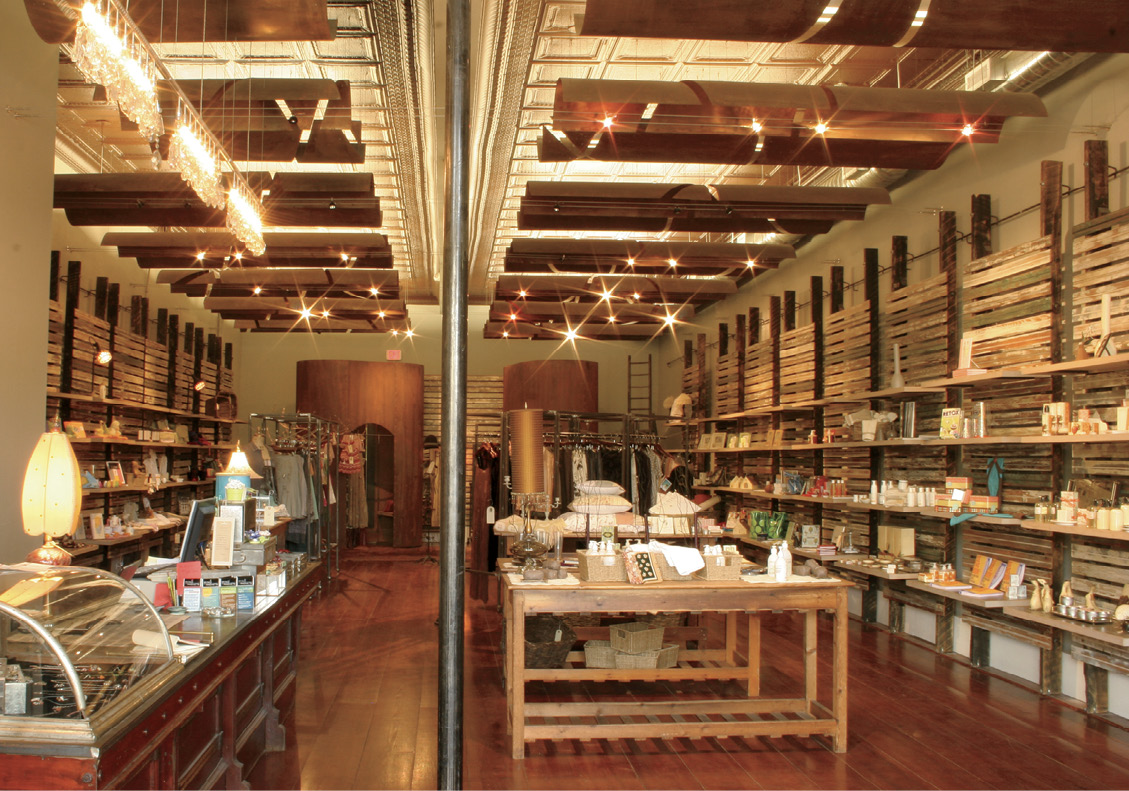
One example of this is 12 Magazine St. in Downtown Charleston, which the couple purchased to house Robben Richards’ boutique clothing shop, Worthwhile. The restoration of the building, constructed in 1795, includes a new window wall on the addition, inspired by Charleston’s iconic vernacular piazzas.
“As with many of my projects, we removed the recently installed gypsum wallboard to permanently expose the wood frame structure of the original building,” Richards says.
Richards incorporates metaphors into his architectural projects. His wife’s previous Worthwhile boutique in Asheville referenced the vernacular barns of the rural Carolinas. Metal canopies referenced old tin roofs, and the striations in the custom copper ceiling canopies alluded to bird nests in the rafters of the barns. The changing rooms of the store paid homage to silos, and open slats on the movable shelving systems referenced the louvered siding boards of the dwindling tobacco barns.
Regarding his custom design projects, Richards believes new designs should be an extension of the context in which the project is located. One recent project was a residence located on the marsh side of Folly Beach. Although the brick form of the house pays homage to the historical vernacular masonry buildings built throughout the Lowcountry, the expansive glass windows incorporate a modern aesthetic that brings the outside natural features into the home. The light stone brick and terracing with natural grass and indigenous plant material provide a geometric, manmade extension to the mercurial nature of the similarly colored sand that makes up the island.
Richards and his wife frequently collaborate on projects, even those that stray from traditional architecture but bear their distinct creative signature. She earned an art degree from Cranbrook Academy of Art in Michigan and contributes her artistic perspective to commissioned sculpture projects. At Louis’ Las Vegas Restaurant, the couple incorporated the ceiling sculpture Cloth and Steel, an artistic nod to cotton production and its enduring connection to the heritage of the Deep South. The restaurant was awarded the Las Vegas Journal’s esteemed award as the best new restaurant in Las Vegas in 2007.
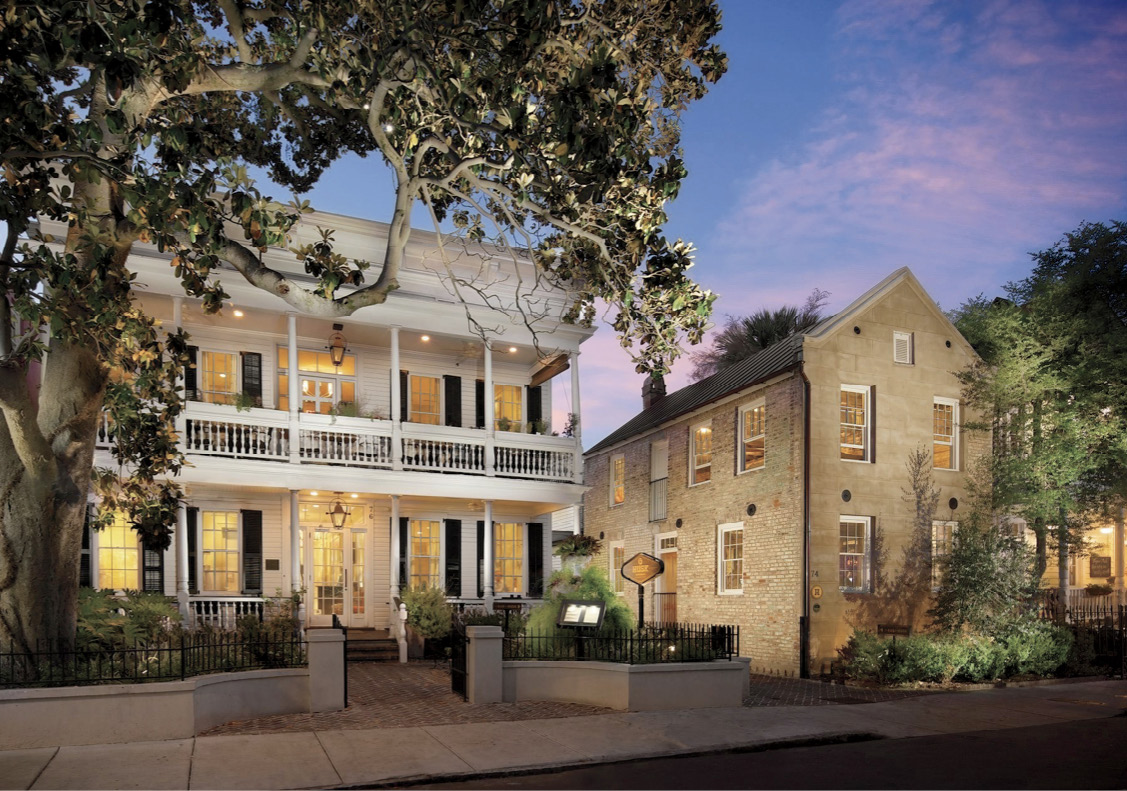
The referential and contextual aspects of Richards’ designs are clear. With over 200 projects within his impressive portfolio and numerous awards, his residential, commercial and historic renovations have warranted acclaim. Some of those notable renovations include Husk restaurant, Tempest restaurant, The Gibbes Museum of Art’s interior upfits and modifications, The Elliott House Inn and Bumpa’s restaurant.
Great architecture is deep and creative, but not everyone shares the same vision. “Architects rarely receive artistic license, and not all clients are willing to take a leap of faith, so several of my designs remain just design concepts,” he says.
Richards’ website showcases potential projects, with models and renderings illustrating his innovative and distinctive design repertoire, offering a glimpse into his creative process and aspirations.
He currently has multiple renovation and adaptive reuse commercial and residential projects underway in Charleston and the Lowcountry. With his office and home on Broad Street, he seeks out interesting projects and clients who share his passion for unique and potentially transcendent designs. His devotion to creating beautiful and meaningful work remains his central focus, believing that the ups and downs of his profession are worth it.
They are indeed. It’s akin to witnessing a sunset, hearing a hauntingly beautiful musical score or viewing a work of art. Standing in a space that feels sacred, as many do in our fair city, we are moved, grasping the enormity of our shared experiences—ones that connect us to one another, to the past, to the future. And the significance of preserving and protecting them all. *
Brigitte Surette is a freelance professional writer, editor and copywriter. Visit brigittesurette.com to learn more.